Thursday, February 10, 2011

Real American Heroes

Inspired by Don Boudreaux's "Cleaned by Capitalism" series and an unfortunate remark delivered by John McCain during the 2008 Republican presidential debates, I've posted the first installment of what I hope to be a fun series of articles on Freedom's Phoenix, Real American Heroes.

The first installment features one of America's lynchpins that I have never seen given a fraction of the recognition they deserve, grocers.


The grocer, a Real American Hero, is the public face of a long line of millions of strangers from around the world who, pursuing their own self interests, truly enable the American standard of living.

...

All this is done to satisfy customers from every class, color, creed and occupation who, in turn, freed from the necessity to hunt, fish and farm to provide a basic, precarious level of sustenance for their families, can spend their precious time in pursuit of their own self self interests.

Unlike McCain, I find the idea of measuring success by "patriotism, not profit" to be ideologically disgusting and practically nonsensical. Say all you want about displacement and buoyancy, the only thing that makes an aircraft carrier float is the profit generated by productive Americans.

Labels: ,

Tuesday, January 04, 2011

Hokey Religion

The "profession" of economics is broken. The peer review process doesn't work, the majority of the schools teach numerology and mythology as religious dogma, reward is given to crass, disfigured scientism, while beautiful, descriptive, self-evident science is regarded as magical.

Russ Roberts has a string of questions offered as a litmus test. The science of economics cannot answer these questions definitively; only "economic" religion and its mystics will offer final answers.

Suppose the economy does well this year–growth is robust and unemployment falls. What is the reason for the improvement? Will it be because of the natural rebound of an economy after a downturn that has lasted longer than people thought? The impact of the stimulus finally kicking in? The psychological or real impact of extending the Bush tax cuts? The psychological or real impact of the November election results? The steady hand of Obama at the tiller? All of the above? Can any model of the economy pass the test and answer these questions?

The reason macroeconomics is not a science and not even scientific is that the question I pose above is not answerable. If the economy improves, there will be much talk about the reason. Data and evidence will be trotted out in support of the speaker’s viewpoint. But that is not science. We don’t have a way of distinguishing between those different theories or of giving them weights to measure their independent contribution.


I know other sciences have their kooks and cranks. I know there are political games played within their peer review, also. I realize that science is not perfect (or else it wouldn't be science).

My question is, though, how do the other sciences protect the kooks and cranks from dogma, while protecting the science from being overrun with kooks and cranks? How is the bright line between conclusion and opinion enforced? How do they punish games of three-card-monty being played with the data and math?

Or, do they?

Labels:

Thursday, September 09, 2010

9 Principles of Economics

Art Carden boils down the first chapter of the The Economic Way of Thinking into nine principles:

1) People act.
2) Every action has a cost.
3) People respond to incentives.
4) People make decisions at the margin.
5) Trade makes people better off.
6) People are rational.
7) Using markets is costly, but using governments can be costlier still.
8) Profits tell businesses they are helping others, while losses tell businesses they are wasting resources.
9) We shouldn't ignore the long-term and unintended consequences of policies and actions.

Carden amplifies the list a bit, there are full-course seminars that basically follow this outline, and there are books written on each of these principles individually, showing that this list can be the basis for just about any project you want to do in economics, big or small.

Three projects spring to mind: a one-hour "intro to econ" lecture, a series of one-page abstracts on each of the principles, and a bibliography encompassing the principles.

Of course, all that work's already been done. It's just a matter of arranging it into a nice, neat package and making it accessible to folks tasked with explaining econ to non-economists.

Labels:

Monday, November 30, 2009

Coconut-Crusted Salmon will be Served in the First Class Cabin

Amid the constant moaning and wailing, Joe Public may be forgiven for failing to notice the astounding changes he has seen in his standard of living over the last forty years. No, he doesn't have a yacht and the proletariat revolution has left him still working 40+ hours per week, but he has traded in his plaid pants and 8-track tapes for more comfortable digs.

Steven Horwitz has the numbers:


[L]ife for the average American is better today than 35 years ago, life for poor Americans is much better than it was 35 years ago, and poor Americans today largely live better than the average American did 35 years ago. Hard to square with a narrative of economic stagnation or decline.
Mark Perry took Horwitz's description of what has happened and started us down the path to explaining why that has happened. Using a similar basket of household appliances, Perry expressed their cost in terms of labor hours:


Now, cautions abound at jumping to conclusions that the data quality doesn't support. But, in terms of this selected basket of common household appliances coupled with the BLS wage statistics, saying nothing about the quality of the appliances listed, we can safely observe an astounding increase in average American worker productivity over the last 36 years.

This runs counter to the narratives describing Americans as fat and lazy, and declaring that “Americans don't make anything anymore.” However, the increase in productivity is absolutely unsurprising given the advances in technology, materials science, and industrial processes over the same period. In other words, with better capital goods and factors, workers (all workers, not just American) can make more in less time and with less effort.

But, it is not right to say that the increase in productivity and advances in production methods are a product of the last forty years. It is not correct to attribute exponential growth in human productivity to the last few seconds of human history, nor to the actions of any person, group, or even all humanity alive during that period.

Rather, the seeds that allowed that growth to happen were sowed thousands of years ago with a simple, evolutionary discovery that has led man on a path from precarious existence to jetting over the oceans at 45,000 feet as a matter of course.

Specialization

We don't know what day Ug and Ur made their discovery, nor do we know the circumstances that led to it, because they were too busy living another day to properly document it for us. But, we can be relatively sure it started with a few seconds of rest and relaxation. Since their cave is about as far as we can get from iPods and nanotechnology, please forgive me a few moments of poetic license in imagining how those few seconds of R&R led to millions of man hours of R&D.One day, Ug and Ur followed their normal routine of catching fish in the morning and foraging for coconuts in the afternoon. Ug noticed that he caught three fish faster than Ur. But, even with that extra time, he lagged behind Ur in coconut-finding. That night, with his head on a rock pillow, in the moments before falling asleep Ug hit upon a wild idea.

The next day, using a series of grunts and gestures, Ug convinced Ur to spend the entire day collecting coconuts while Ug spent the day catching fish. At the end of the day, he reasoned, they could share the fish and coconuts.

But, an amazing thing happened when they got back to the cave. Instead of the usual six fish and six coconuts, Ug and Ur counted seven fish and seven coconuts. That night, Ug and Ur feasted on their unexpected windfall.

They continued their pattern of specialization and feasting for a few days when Ur came up with a great idea of his own. Rather than eating the extra coconut, he would store it in the cave for the time of year when coconuts were scarce. After a few weeks, the cave was overflowing with coconuts and Ur had to limit the number of coconuts he brought back every day.

Ug was extremely jealous of Ur's new found leisure time, so he persuaded Ur to use that time to build a pen in the water so they could stockpile fish, too. When the pen was completed, Ur built himself a ladder to help his coconut collection. Once the pen was full, Ug used his leisure time to weave a net.

This trend continued for years. With each iteration, fishing and foraging consumed less time and took less effort, moving Ug and Ur further from living precariously on the day's labor and giving them more leisure time. In turn, they used some of their food savings and extra time to develop better and better capital goods, making their labor ever more productive.

At some point, Ug and Ur became so productive that they could feed the rest of the population. Freed from the necessity of hunting, fishing, and foraging, those people spent their time producing other capital and consumer goods like mud huts, clay pots, ovens, and forges. Over thousands of years, productivity increased to the point where some people's entire productive lives were spent producing R&D on better materials, processes, and products but never actually building anything.

And so, we can see that 747s are just a hop, skip, and a jump from an extra coconut per day.


Division of Labor
Tool use almost certainly preceded the regular division of labor, but it is impossible to get from stone hammers to today's tools without the division of labor. By specializing in the area of their comparative advantage, Ug, Ur, and early humans like them carved the foundations of human existence a few extra seconds at a time.

In the story above, Ug and Ur had absolute advantages in their respective specialties, but that is not necessary. As long as Ug and Ur do not have the exact same production capabilities, each specializing in the area of their comparative advantage results in greater total production than the sum of their individual efforts at being self-sufficient, even if Ur is less productive than Ug at both specialties.

And, then, Came the Non-Productive
It is worth noting that, in some parts of the world, existence today is more on the scale of Ug and Ur than the average (or even poorest) American household. One has to wonder why, if Ug's discovery of the division of labor is so incredible, all of humanity hasn't benefited from it equally (or at least similarly). The simple explanation is that one consequence of the wealth delivered by the division of labor is the ability of an unproductive class to exist that actively and violently prevents what should be a natural spread of wealth through human interaction.

Actually, to label this class unproductive is charitable as unproductive puts them on par with infants and the infirm. This class is negatively productive, destroying the production of other people in their day-to-day actions. For lack of a better term, we group this class under the name “government”.

In the tables created by Horwitz and Perry, we can see that the vast majority of American households choose to partake in the quality of life increases available to them. However, even those that choose a simpler lifestyle have a buffer between them and death due to famine, disease, or other disaster. This is because the negatively-productive government class has not enjoyed the same trust or commanded the same fear in the populations of Europe and the Americas as it has in some other parts of the world.

It is no coincidence that populations who have benefited least from the division of labor are the populations most plagued by the government class' negative productivity.

It would be a simple, and very economic, process to provide these workers with the latest capital goods and technology; as in America, the vast majority of them would intelligently cry, “exploit me! Please!” In fact, the only thing that could possibly stop the spread of wealth and productive capacity is physical violence. And, the only people with the time to violently restrict that spread are those living off the production of others: the government class.

It's a shame that Ug and Ur didn't use some of their leisure time to beat the snot out of the first person to come along (probably named Richard) and demand a portion of their labor at the point of a sharpened stick. Hopefully we can do that in the next human evolution.

Labels: , , ,

Tuesday, May 13, 2008

Taming the Tiger

Three scientists, Maynard, Frank, and Ludwig, stood in front of the door of a tiger cage. On the other side of the cage a tiger calmly walked back and forth, exploring the boundaries of his home. The scientists were discussing the best way to get the tiger into the next room.

Ludwig proposed a simple solution. The tiger was obviously curious about his surroundings; why not just get out of the way and let the tiger explore on his own. Eventually the tiger will pass through the door into the other room.

Maynard scoffed at Ludwig. “The tiger must be pushed into the other room,” Maynard exclaimed. “Otherwise, who knows how long it will take to explore this area? It may even retreat from the door before it actually walks through it. For its own good, we must shove it continually in the right direction.”

With that, Maynard called two assistants over and instructed them to push the tiger towards the door whenever it wasn't making progress (as defined by Maynard). The two assistants walked behind the tiger and shoved on the animal's rump. “Be careful!” yelled Ludwig, but the assistants didn't listen. They shoved and, predictably, the tiger spun around and effortlessly mauled them both.

“Stop this infernal noise,” Ludwig told Maynard. “You're just going to get more assistants hurt if you keep this up.”

Undeterred, Maynard called over a team of assistants and armed them with cattle prods. The assistants formed a line and began prodding the tiger. Any time the tiger lunged at an assistant, two others would jump in and shock it. Retreating from the shocks, the tiger slowly backed towards the door.

Thrilled with the success of the Maynard method, the lab manager, overlooking the cage, quickly dictated a lab-wide memo declaring, “we're all Maynards now!”

Suddenly, the tiger stopped his retreat and crouched. “Shock him!” yelled Maynard, but each time a lab assistant moved to shock the tiger, it would swipe at the assistant's ankles. Soon, all the assistants had their cattle prods on full power, delivering continuous voltage, yet the tiger refused to budge. As the cattle prods began to overheat, the lab assistants dropped them and ran off to tend the blisters rising on their hands.

Frank just chuckled. “You can't push a tiger and you can't herd cats,” he said. “Tigers are going to go where they want to go. The key is providing the proper incentives for him to want to go where we want him to go. We'll just toss some steak in the other room and this beast will go right to it.”

“How much steak are you going to put out for him?” asked Ludwig. “If you put too much out, he'll get going too fast and break his neck running through the doorway.”

“We'll monitor his speed," said Frank, "if he's going too slow, we'll add some steak. If he gets going too fast, we'll take some steak away. We're fully capable of outsmarting a tiger.”

“What if he moves away from the door?”

“Ludwig, what a silly question,” Frank chided. “The tiger isn't going to move away from the door when there is steak to be had. But, in theory, if he did we'd just have to pile on more steak until he started moving in the right direction.”

Frank directed an assistant in the other room to toss out a porterhouse. The tiger, slightly dazed from riding Maynard's lightning, raised its head and sniffed the air. “It's working!” yelled Frank. “More steak!”

The assistant, who couldn't actually see the tiger from the other room, added a steak.

“More! More steak!” yelled Frank as the tiger stood and started walking towards the door. The tiger broke into a trot and soon began loping towards the door. “Take some away!” yelled Frank.

The process continued with Frank relaying instructions to his assistant until a breeze blew through the tiger cage. Confused by the breeze, the tiger began drifting off course and was soon moving in an arc about the door not towards it.

“More steak, more steak! Get some more steak out there now!” yelled Frank.

“That's too much steak,” Ludwig offered. “If he starts moving towards the door, your assistant won't have time to slow him down!”

Frank ignored him and screamed at his assistant. “More steak! Now! Use it all!”

Just then the breeze quit. The tiger regained the direction of the steak pile and, with cat-like reflexes, sprang towards the doorway, sending the three scientists skittering out of its way. The big cat roared as it galloped towards the treasure he smelled, completely drowning out Frank's pitiful wail, “Too much! Take it away, take it away!”

In a blind fervor to get to the steak, the tiger misjudged the width of the door and ran headlong into the door jam. The cat hit the door jam so hard that it bounced half way back into the cage where it sat in a dazed stupor.

“Enough!” crackled a voice over the intercom. The voice belonged to Hillary, one of the lab's management trainees. “Just shoot the damn cat and drag it into the other room. Once it's in there you can unkill it.”

All three scientists spun around and looked up at the observation window. “What?” they asked in unison. “That won't work. You can't unkill a tiger.”

“You can,” Hillary insisted. “You just have to do it the right way. I don't hold with you scientists and your science. I can unkill it.”

“Yes,” said Carly, the spokesperson for another MT. “You scientists are always arguing about your theories and hypotheses. John and I both agree with Hillary. In fact, killing and then unkilling the cat was John's idea in the first place.”

“John?” asked Ludwig. “You mean 'I don't know much about science' John? His solution, then, is to just ignore the science? We could have had the tiger in the other room hours ago of its own volition if we would have just left it alone to do its thing, but now you want to kill it? Wow! I hope none of you actually ever becomes the lab manager!”

Developing...

Labels: , , , , ,

Wednesday, September 12, 2007

Something Fun for Once

Patrick Rishe takes on pro sports salaries on his ProfCorner Blog. It's always dangerous to criticize a professor, but I've got a few nits to pick with his methodology.

Rishe starts out strong, noting that nobody holds a gun to your head forcing you to consume mass quantities of pro sports entertainment:

No one puts a gun to my head when I sit on my BLEEP for 6 hours at a sports bar to watch the opening day of the NFL season.

No one is twisting my arm to shell out marked-up prices for sporting events on Stubhub.

Free will...it's a BLEEP sometimes isn't it.

Pro athletes, no different from highly paid movie stars and music icons, entertain the masses, and possess the rare attributes to do so...like it or not.

If I had a body like Matthew McConaughey and taught my econ courses shirtless and simulcast to an audience of millions worldwide that expected to gain Alan Greenspan-like wisdom from merely watching me speak, I'd be a millionaire to.[sic]
Then Rishe derails. If the customers are buying entertainment, what does Rishe say the players are producing?

...one could argue that NBA players deserve more compensation because one player's marginal contributions to production (i.e. wins) is more significant.
Oops. I've got news for the professor: in every game, there is a winner and a loser. You can't have one without the other; the losing team is just as productive as the winning team in producing a "win".

The true product is the one that the customer consumes: entertainment. While Rishe may contend that the losing team's product is inferior to a winning team's, in doing so he would deny the existence of the "die hard fan." In other words, the quality (and value) of the entertainment product is purely in the eye of the beholder.

In fact, an individual consumer of pro sports entertainment could very well be ambivalent about the winner or loser of a specific game and still place a very high value on the entertainment. Additionally, if the consumer doesn't particularly care for a rival team, an individual consumer may place a higher value on a loss by that team.

Given that, the only accurate value judgments one could make about an individual customer are that, assuming the consumer is a fan of the team in question:

1) that customer values the entertainment of a winning season over a losing season;
2) that customer values the entertainment of specific superstars over other superstars, and;
3) that customer therefore values the entertainment of a winning season with the preferred superstars over a losing season with or without the other superstars.

The method one would use to aggregate individual consumers into a market demand necessarily varies from one market to another. Due to a whole host of variances from market to market, you can not determine aggregate demand in Milwaukee the same way as in Los Angeles or even Charlotte. Those markets demand entirely different equations.

Which leads to another problem with Rishe's analysis:

The Biggest Misnomer in Sports

Higher ticket prices are not caused by higher salaries.

...

Truth is, teams raise prices either because they feel they can or they feel they must. If a team believes that demand for their product is sufficiently high and that raising prices will not cost the team lost attendance, then prices will increase...irrespective of team payroll.
First, the revenue equation is price times attendance, not price plus attendance. Revenue maximization depends on the elasticity of demand not (necessarily) filling the bleachers. Second, this is a sure case where, due to locality effects, a rising tide floats all boats.

If, by raising the amount they are willing to bid for contracts (salaries), Anaheim is able to attract the talent with a broad enough appeal to decrease the elasticity of demand for Angel's tickets, then indeed the higher salaries cause an increase in ticket prices. Even if Anaheim is not revenue-maximizing, scalpers sure will be. Additionally, if Padres and Dodgers tickets are the next best use of entertainment dollars, ticket prices will also go up in San Diego and LA (otherwise there will, again, be a demand surplus that scalpers will fill).

Note, those are both "if"s. Another "if" is that if the salaries are raised and the elasticity of demand is unaffected or increased, then raising ticket prices will decrease attendance and revenue. The point to be made is not that higher salaries have to cause increases in ticket prices, it's that they may.

Lastly:

Practically speaking, many teams have set their ticket prices for the upcoming season before knowing what their payroll for that season will be. So again, this fact partially debunks the myth.
There is no way to set ticket prices without at least a, wait for it, ballpark payroll figure. That's why, I'm sure, that owners employ a small army of accountants, economists, and market research firms like Sportsimpacts to prognosticate.

Labels: , , , ,

Monday, July 16, 2007

Cheap TVs and Cars - A How-To


Photograph: Bishop Asare/EPA

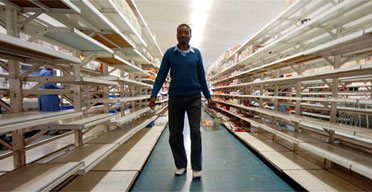
At night, retailers dream about throngs of customers storming the aisles and snapping up the highest-priced items. The customers flood the check-out lanes with their purchases and fist-fulls of cash. It would be better than the day after Thanksgiving. Or, would it?

As with most questions the answer is, "it depends."

Zimbabweans are shopping like there's no tomorrow. With police patrolling the aisles of Harare's electrical shops to enforce massive government-ordered price cuts, the widescreen TVs were the first things to go, for as little as £20. Across the country, shoes, clothes, toiletries and different kinds of food were all swept from the shelves as a nation with the world's fastest shrinking economy gorged itself on one last spending spree.

Car dealers said officials were trying to force them to sell vehicles at the official exchange rate, effectively meaning that a car costing £15,000 could be had for £30 by changing money on the blackmarket. The owners of several dealerships have been arrested.

President Robert Mugabe's order that all shop prices be cut by at least half, and sometimes several times more, has forced stores to open to hordes of customers waving thick blocks of near worthless money given new value by the price cuts. The police and groups of ruling party supporters could be seen leading the charge for a bargain.
For the monetary-exchange challenged, that's $US 61.10 for a $US 30,550 car. I'll bet the vast majority didn't even have to finance.

What's the penalty if you don't comply with the government?

The price cuts were ordered by the joint operation command, a committee of army, intelligence and police officers closely tied to the ruling Zanu-PF and chaired by Mr Mugabe.

The government despatched security personnel and party cadres, including its notorious "green bomber" thugs, to enforce the price cuts, in some cases by beating up shop managers who did not implement them quickly enough.
Sounds awfully peaceful to me. So, what is the result of "Operation Reduce Prices"?

The impact of the price cuts was felt almost immediately as fuel virtually disappeared from sale after garages were forced to sell petrol for 23p a litre, less than they paid the state-owned supplier.

The police and army broke the locks on petrol pumps at some garages and tanks ran dry amid panic buying. Now petrol is available only on the blackmarket, at more than seven times the official price and three times what garages had been charging. By Saturday, most minibus taxis had gone from the roads because drivers could not find petrol. Crowds of workers were left on kerbs for hours trying to get to or from their jobs.

The riot police had to be called out to the South African-owned Makro super store in Harare after thousands of people stormed the shop after it was forced to slash prices. The scenes were replicated in stores throughout Harare. The Bata shoe chain's shops were stripped bare in two days by people snapping up pairs for as little as 20p.

Food is still available, although bread, sugar, cornmeal and other staples are hard to find, and meat has all but disappeared because livestock owners say it is now uneconomic to slaughter their animals. Much of the meat that is available is goat slaughtered in backyards and sold in informal markets.

The rest of the food supply - already severely undermined by drought and lack of production on land seized from white farmers - is also under threat after Mr Mugabe threatened to take over manufacturers if they shut down their plants on the grounds that they were uneconomic. "Factories must produce. If they don't, we will take you over ... We will seize the factories," he said.
Darn. If only there was some type of science that could predict such an outcome. Oh, wait! Here it is:

Economists say the price cuts will only deepen the national crisis, leaving many shops bare because they will not be able to afford to restock while official retail prices remain lower than the cost of buying wholesale or importing. Mr Mugabe has dismissed such warnings as "bookish economics".
The sick part of that statement is that he's right. Economists tend to be extremely bookish - if it can't be observed from their desk chair, they aren't interested in it. Until progenitors of the "dismal science" learn to actually use the scientific method "bookish" is the best you can say of them. The Zimbabwe scenario, repeated so many times throughout history, will continue until they do.

However, to do so would require work (something that economists tend to praise, but eschew at all costs). It would require proofs and controlled experiments. It would require hypothesis and testing. It would require publishing results incongruous with personal bias.

Worse, it would require funding. Funding that would have to come from sources open to the possibility of results antithetical to their social agendas.

It's much more fun, I guess, to live in a world where governments promote mass starvation and genocide at the point of a gun.

Labels: , , , , ,

Tuesday, July 10, 2007

33 Questions

What could possibly rival a good, long economics rant in terms of yawn-inducement? Paint drying? Grass growing? Paris Hilton?

Nope. It's an astrophysics lecture. I mean, come ON! All math, no theory; just plug in the numbers and launch the rocket already! Open the book the night before the final, memorize the formulas and presto: you've got a B.

In close second comes a history lecture. It's not the subject matter; history has a certain [voyeuristic?] allure where you get points for the details and for discovering the nasty secrets of dead people who can't spin the conversation. Nevertheless, most history profs have a way of taking a fascinating subject and turning it into a torture session.

When a historian starts speaking, I immediately flash to the scene in Mrs. Doubtfire where William Newman drones on about ornithischia.

One historian, though, has captured my attention for the past couple of years. He's got a way of parsing out the important details of an historical event, teasing you with the most interesting tidbits, and then leaving you with a never-ending stream of source material. Not surprisingly, this makes Thomas E. Woods, Jr. the envy of historians who don't understand why people sleep through their lectures.

More importantly to Professor Woods, however, they are also envious of his books. They are written as he speaks: more information than you could possibly want to know presented in a way that leaves you wanting more. Unable to compete with him for eyeballs and attention spans, the history-trolls attack him in reviews without offering any contradiction to his work.
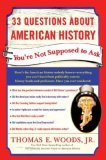
You know the best reads, music, and movies are the ones most castigated by the New York Times. Woods' book, The Politically Incorrect Guide to American History, was definitely targeted by the Times and, yes, it's great. (I gave a copy of it to my mother-in-law for Christmas, and I love my mother-in-law!)

So, I got a little excited this morning when I received an e-mail reminding me that today is the official release of Woods' latest book, 33 Questions About American History You're Not Supposed to Ask. From everything I've read, Woods wrote this book just to poke sticks at the history-trolls. Here's an example:

How wild was the "wild" West?

The standard story there, seared into the American consciousness and folklore by motion pictures and other tall tales, is one of constant chaos and peril. But historians have been rejecting that old view for some time. In fact, implausible as this may sound, what is most impressive about the old West was how peaceful and cooperative it was. Although you'd never know it, scholars have repeatedly shown that the old West was actually safer than most American cities today.

In the absence of formal government, voluntary institutions emerged that defined and enforced property rights and adjudicated disputes. Far from a land of lawlessness and violence, a myth spun from tales designed to sell dime novels, the old West actually constitutes a fascinating case study of the ability of market institutions, even in apparently impossible conditions, to facilitate peaceful interaction and to carry out functions we normally associate with government.

The story is all the more impressive when we recall the inauspicious circumstances in which these events occurred. The settlers were men of vastly different backgrounds. They had no intention of putting down permanent roots; they intended to make their fortune and return back home. They were complete strangers with no pre-existing community camaraderie on which to build. And yet, according to Andrew Morriss of Case Western Reserve University School of Law, "This amazing polyglot of men seeking rapid wealth, and with virtually no intention of building a lasting society, created a set of customary legal institutions which not only flourished in California but successfully adapted to conditions across the West."

Seems pretty tame, but watch the book reviews over the next few weeks. The more vicious the attacks are, the more you know you want to read this book.

UPDATE: Thomas Woods on WHO's "Mickelson in the Morning".

Labels: , , , , , ,